

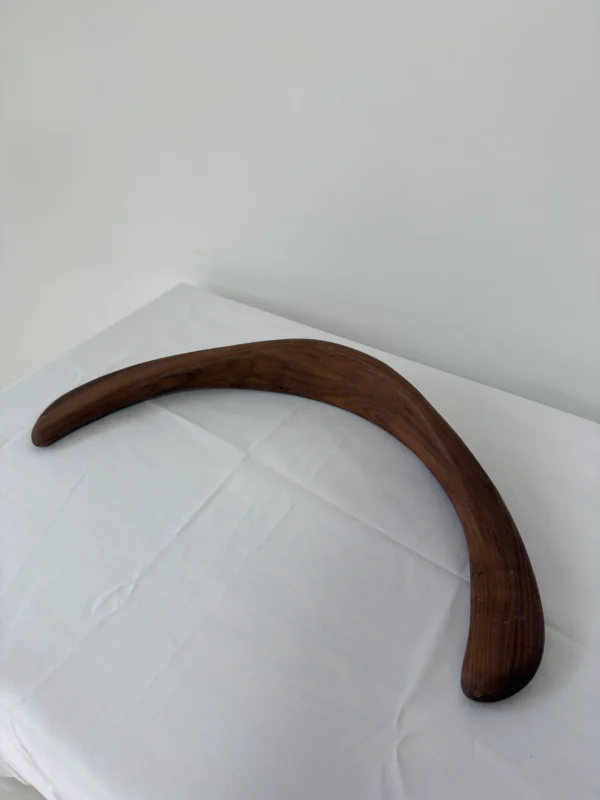
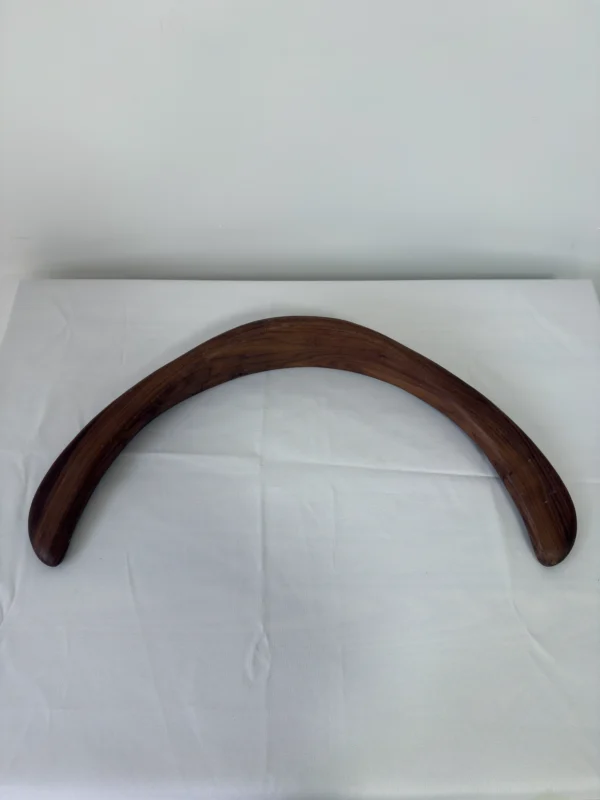
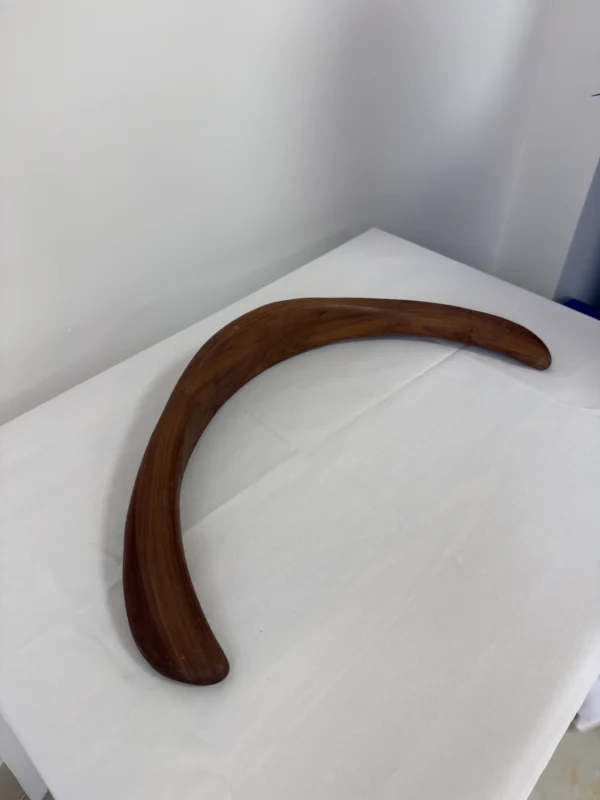
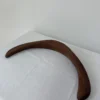
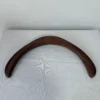
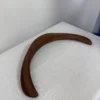
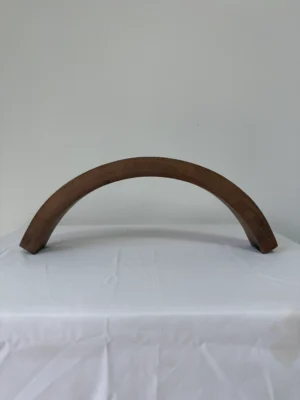
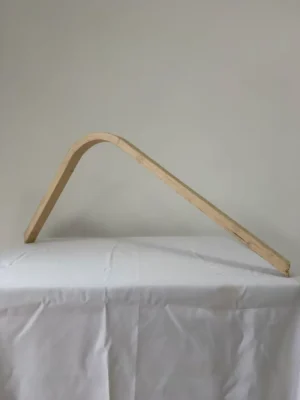
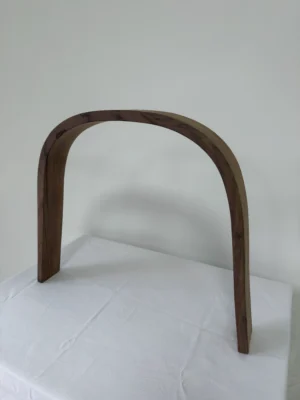
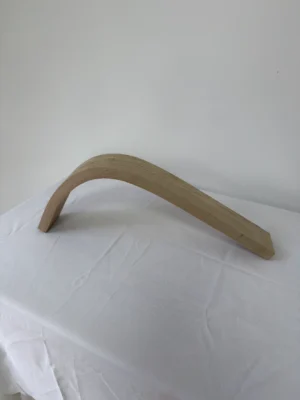
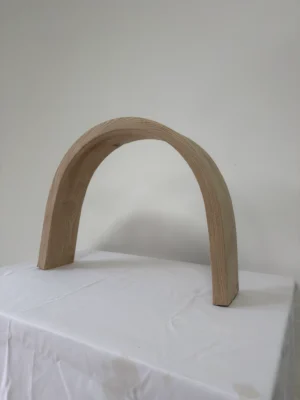
A black walnut solid bent wood component made to your drawing — for programmes where the dark, figured surface is the point of the part. Walnut is the premium bending species: deep warm brown with figure that reads from straight to wildly figured, specified when the component is a visible feature rather than a hidden structural element.
What walnut is good at — and what it is not
Walnut is denser than ash or beech (roughly 640 kg/m³), which means it bends to more generous radii at a given section. For slender parts at tight radii, ash is the better choice; for parts where the surface is the specification, nothing else looks like walnut. Where a design needs a tight curve in a dark wood, the standard solution is a walnut face over a laminated core — the same appearance with more forgiving behaviour.
Specifications
| Material | Black walnut (Juglans nigra) |
| Construction | Solid steam-bent; face-veneered lamination for tight curves |
| Dimensions | Custom to drawings; CNC accuracy within ±0.5 mm |
| Finishes | Oil, hard-wax oil or clear lacquer |
| MOQ | From 1 piece |
| Lead time | Prototype 7–15 days · bulk 15–30 days |
| Certification | FSC/PEFC materials available |
Figure and selection
Walnut is bought for its figure, so blanks are selected visually before any bending — colour and grain matched across the pieces that will make up one visible part, because a component assembled from mismatched boards reads as a defect even when every piece is sound. Tell us whether the part is a single visible element or one of a production run, and we will select accordingly.
Finishing and protection
Oil and hard-wax oil keep the surface repairable and let the figure read naturally; clear lacquer seals it for cleaning and adds sheen. Walnut lightens with UV exposure over years, so a renewable finish ages better than a film finish — for parts that will be handled, we recommend a finish that can be renewed in place.
Moisture and movement
Walnut moves with humidity like any hardwood. Parts are dried in their forms and verified before machining, and we set the moisture-content target against your destination market — equilibrium moisture content indoors typically runs 6–12%. A part shipped too wet to a dry market will check at the surface as it equilibrates, which is why this is a specification rather than an assumption.
Ordering
Send the drawing with radius, section and quantity, and tell us whether the surface is solid or face-veneered. We confirm the construction, quote within 24 hours, and deliver prototypes in 7–15 days. See also our bent walnut material page.
Ready to start your project? Send your drawings, samples or specifications through our contact page and receive a quotation within 24 hours. Prototypes are delivered in 7–15 days and bulk orders in 15–30 days.
Walnut in context
For pale, tight-radius, load-bearing parts, ash is the default. For painted or traditional work, beech. For compound curves and volume consistency, laminated construction. Walnut is the choice when the surface is the specification — and when the curve is tight, it is used as a face over that same laminated core.
Figure grades and selection
Three levels cover most programmes:
- Clear, straight-grained — the most predictable to bend and the most economical; suited to tight radii within walnut’s limits.
- Figured (curl, crotch) — selected for panels and surfaces where the figure is the feature; usually more generous radii.
- Colour-matched sets — boards selected to match one another across a production run, for programmes where visible consistency is specified.
Combining walnut with other species
The most common premium construction is a walnut face over a laminated birch or ash core: the dark surface where it is seen, a stable and forgiving core where the curve is tight. We also supply walnut alongside pale species for contrast programmes — walnut arms and back posts on an ash frame, for example. Send the drawing with the surface and core specified separately and we will quote both elements as one part.
Common applications
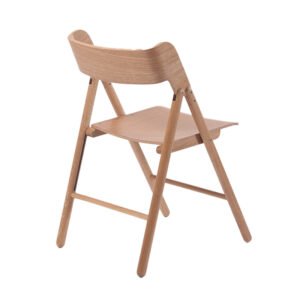
- Premium chair backs and arms — where the dark figure is the point of the piece.
- Seat and back slats — dark slats against pale frames, or full walnut builds.
- Arch components — headboards, mirror surrounds and interior arches.
- Panels and table elements — aprons, edge bands and curved panels for high-end tables.
- Face-veneered laminated parts — walnut faces over birch cores for tight curves at volume.
Ordering
Send the drawing with radius, section and quantity, and tell us whether the surface is solid or face-veneered — we will recommend the construction for your curve. Quotations come back within 24 hours with feasibility feedback, and prototypes follow in 7–15 days. FSC/PEFC-certified walnut is available for programmes that require documented sourcing.
Frequently asked questions
Does walnut bend well?
Yes, at generous radii. Walnut is denser than ash or beech, so tight curves are better served by a walnut face over a laminated core — the same appearance with more forgiving behaviour.
How is walnut selected for a visible part?
Blanks are figure-matched across the pieces that make up one visible element, because mismatched boards read as a defect even when every piece is sound.
What finish suits walnut?
Oil or hard-wax oil keeps it repairable and lets the figure read; clear lacquer seals it for cleaning. Walnut lightens with UV exposure, so a renewable finish ages better.
Will the part move in service?
All wood moves with humidity. Parts are dried in their forms and verified before machining, with the moisture-content target set against your destination market.
Is certified walnut available?
Yes — FSC/PEFC-certified walnut is available on request.
Quality and delivery
Components are bent, dried in their forms, then CNC-machined to final dimensions within ±0.5 mm. Every part passes a six-stage inspection covering moisture content, shape, dimensions and surface finish, with reports on request. Moulds are built in-house and remain yours, so repeat orders reproduce the approved part. Delivery is global, with regular programmes to the EU, US and Southeast Asia, and every shipment carries a full warranty against warping and cracking in transit and use.
Care in service
Walnut’s appearance is its value, so care is a finish decision. Oil and hard-wax oil surfaces are renewed in place with a fresh coat when they wear; lacquered surfaces are cleaned but not refinished without preparation. Either way, keeping the piece out of direct sunlight slows the lightening that UV exposure causes over years, and stable indoor humidity — the 6–12% equilibrium range — keeps the movement that all hardwoods make within the range the joints tolerate.
Summary
A black walnut solid bent component is specified when the surface is the point: deep, figured, and continuous around every curve. It bends to generous radii, it is figure-matched across each visible element, and where your curve is tighter than walnut likes, the same appearance is available as a face over a laminated core. Send the drawing with radius, section and quantity, and we will confirm the construction and quote within 24 hours.
Quick Specifications
| SKU | JX-SBW-WAL-29 |
|---|---|
| Material | Black Walnut |
| Process | Steam bending (solid wood) |
Reviews
There are no reviews yet.