


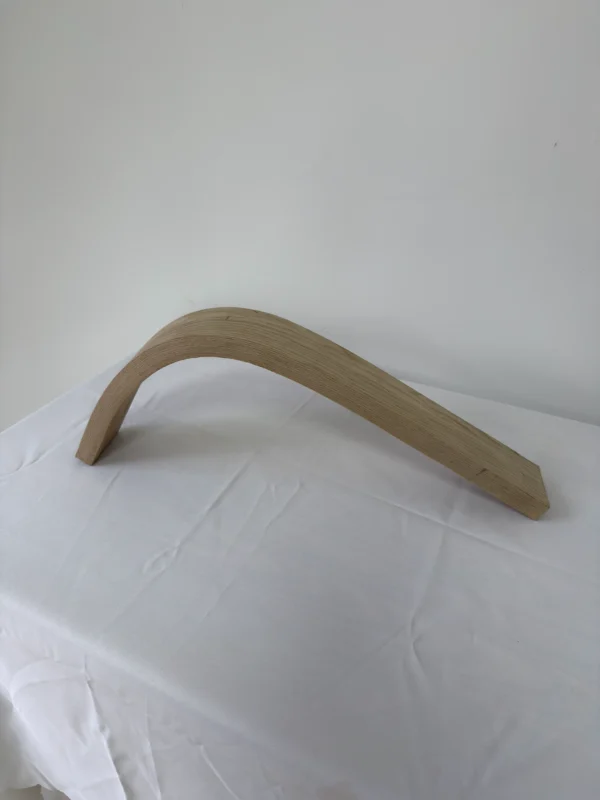
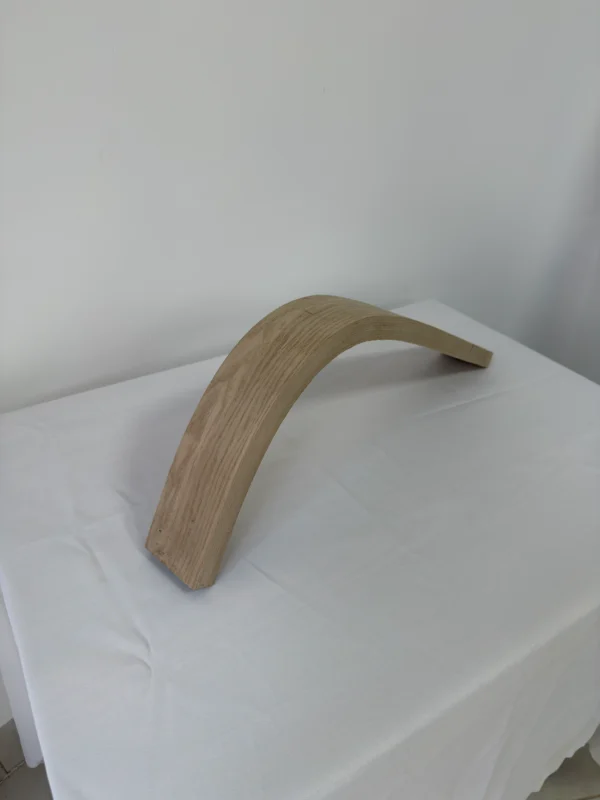
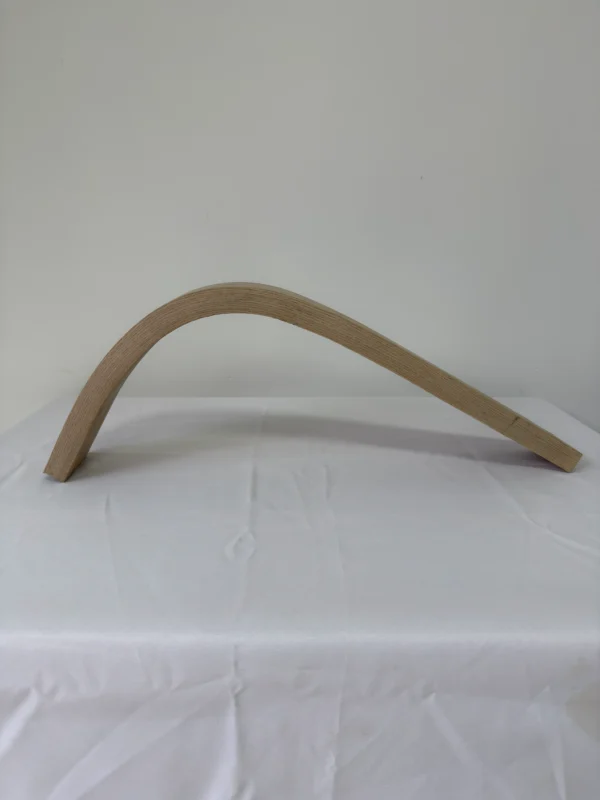
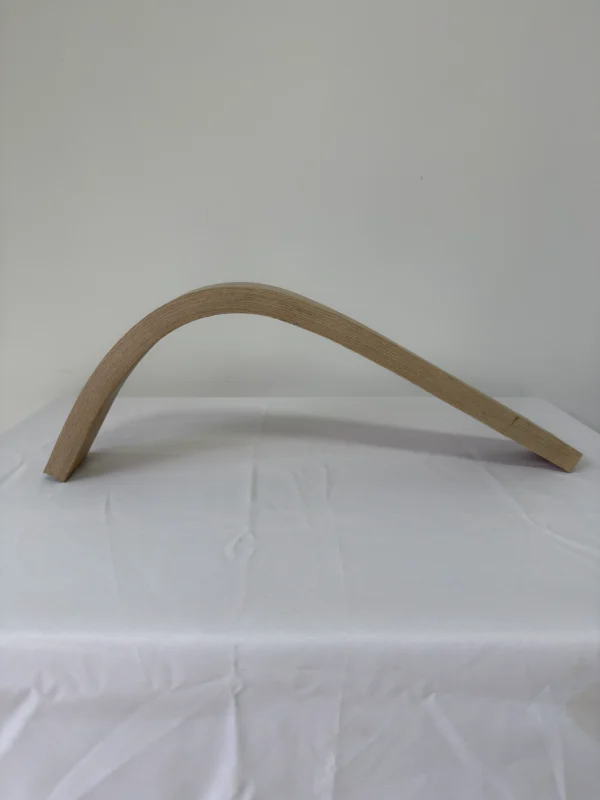
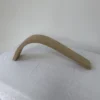

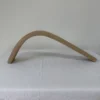
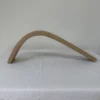
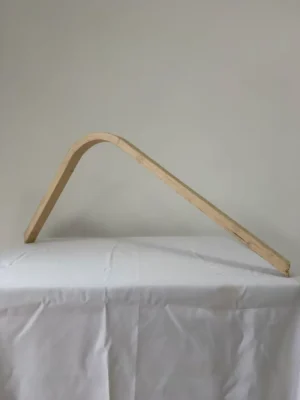
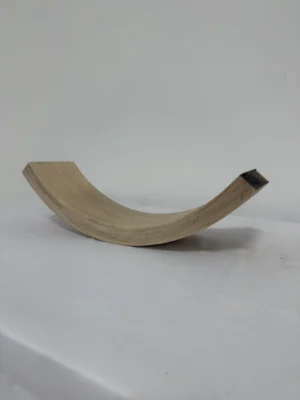
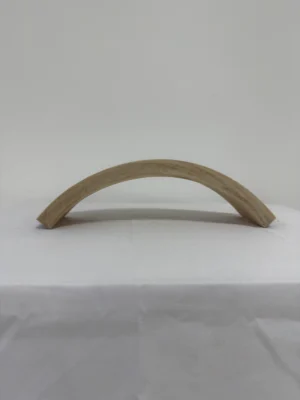
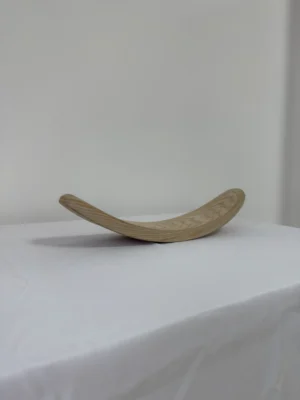
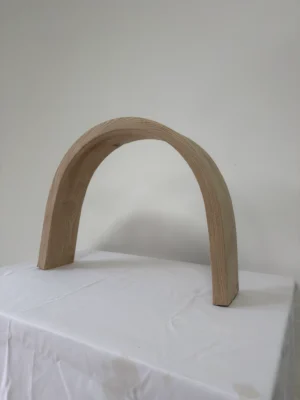
This is our made-to-drawing solid wood bending service in a single product: send us a section, a radius and a species, and we bend it. It exists for programmes whose part does not fit a standard item — a stretcher, a stretcher-curve, a custom blank, a one-off replacement, or the first prototype of a design that is still moving.
What we can bend
- Furniture components — stretchers, curved braces, back rails, seat frames and any part your drawing specifies.
- Blanks for your machining — bent to shape, dried and supplied raw for your own CNC or bench work.
- Replacement parts — matched to originals from a sample or dimensioned photo, for designs no longer in production.
- Prototypes — first articles for a design in development, at prototype quantity.
Specifications
| Construction | Solid steam-bent (laminated where the radius requires it) |
| Materials | White ash, beech, birch, black walnut, oak |
| Dimensions | Fully custom to drawings; CNC accuracy within ±0.5 mm |
| Finishes | Raw, sanded, oiled, stained or lacquered |
| MOQ | From 1 piece |
| Lead time | Prototype 7–15 days · bulk 15–30 days |
| Certification | FSC/PEFC materials available |
How the radius decides the construction
Every bending enquiry comes down to one ratio: the thickness of the section against the radius it must reach. With straight-grained ash or oak and a compression strap, ratios down to about 1:2 are achievable; we recommend 1:5 as the production maximum and 1:10 as typical, because no timber is perfectly straight-grained. Tighter or compound curves usually mean lamination, where thin veneers reach shapes solid wood cannot. Send the drawing and we will confirm which construction your part needs — that answer comes with the quotation, not after a broken sample.
What the price includes
Material, the bending and drying cycle, CNC machining to your dimensions, six-stage inspection, and export packing. Tooling — the form built to your curve — is quoted per part and remains yours. Because moulds are built in-house, a design revision between prototype and production is a tooling update rather than a new supplier relationship.
Ordering
Send the drawing, CAD file, sample or a dimensioned photo, with the target species, finish and quantity. We confirm feasibility and quote within 24 hours, and prototypes follow in 7–15 days. If the part cannot be bent reliably as drawn, you will hear that at quotation stage.
Ready to start your project? Send your drawings, samples or specifications through our contact page and receive a quotation within 24 hours. Prototypes are delivered in 7–15 days and bulk orders in 15–30 days.
Programme types
Most custom bending work falls into one of three patterns:
- New development — you have a concept, sketch or model; we take it through feasibility, mould design, prototype and production.
- Replication — you have an existing part that needs a new source; we match profile, section, dimensions and finish, and document the process for repeat supply.
- Scaling — a proven part made in small batches elsewhere that now needs volume; we build production tooling, lock the process, and supply at quantity with inspection reporting.
What we need from you to quote
- Drawings or CAD files — or a physical sample, or a sketch for early-stage concepts.
- Target material and finish, with any certification requirement stated up front.
- First-order quantity and expected annual volume, so tooling is sized correctly.
- The application and any test standard the part must meet.
- Your timeline — including any trade fair or collection deadline working backwards from it.
Equipment and capacity
The service runs on steam chambers sized to the sections being bent, forms and compression straps built in-house to each customer’s curve, drying chambers that hold parts until the geometry is locked, and CNC machining for the finishing operations. Because the forms are our own tooling, a design change between prototype and production is a tooling update rather than a new supplier relationship — and the same form produces every repeat batch.
Documentation you receive
Every production shipment is accompanied by an inspection report covering the six-stage checks. Material certificates and, where required, FSC/PEFC chain-of-custody documentation are supplied with the goods. Tooling records — the form, the process parameters and the approval sample — are kept on file so a repeat order two years later produces the same part as the first batch.
Industries we serve
Furniture manufacturers and contract seating producers; lighting brands and designers; interior and display fabricators; and restoration workshops replacing parts for classic designs. If your programme needs steps we do not cover — upholstery, metal bases, final assembly — we will tell you which part of it we can own.
Frequently asked questions
What is the smallest radius you can bend?
It depends on species, thickness and grain. With straight-grained ash or oak and a compression strap, ratios down to about 1:2 are achievable; we recommend 1:5 as the production maximum. Send the drawing and we will confirm.
Do you supply blanks for our own machining?
Yes — bent, dried blanks supplied raw for your CNC or bench work, or finished components machined to your dimensions.
What information do you need to quote?
The drawing or sample, target material and finish, quantity, application and any test standard or certification requirement.
Who owns the tooling?
Moulds and jigs built for your programme remain yours and are kept on file for repeat orders.
What if the part cannot be bent as drawn?
You will hear it at quotation stage, with the alternative construction we recommend — usually lamination, or a revised section.
Why low MOQ matters more than it sounds
A low minimum order quantity is not a discount — it is a risk structure. When a supplier can only sell production volumes, every design decision is committed before it is tested: the tooling is built, the batch is run, and the design flaw is discovered by your customer. When prototypes and small first batches are supported, the same programme can validate the part, show it to buyers, and test it in assembly — and only then commit to volume, on the same tooling, with the same process.
For a brand developing a new range, this changes the economics of iteration. The first order stops being a bet and becomes a test. That is the whole reason our structure supports prototype quantities, and it is why we would rather quote a small first batch honestly than push a volume order that suits our kiln schedule rather than your programme.
What we do not do
We are a bending and machining specialist, not a general furniture factory. We do not upholster, we do not supply metal bases or hardware, and we do not take on programmes that need assembly beyond our process. Saying so early is how we avoid promising a part we cannot deliver well — if your programme needs those steps, we will tell you which part of it we can own.
Summary
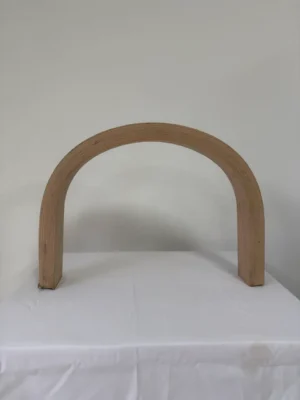
This is the made-to-drawing bending service in a single product: send a section, a radius and a species, and we bend it — with feasibility confirmed before tooling, prototypes in 7–15 days, and tooling that stays yours. Where the radius is tighter than solid wood allows, we will say so and quote the laminated alternative instead.
Quick Specifications
| SKU | JX-SBW-GEN-31 |
|---|---|
| Material | Hardwood (specify on enquiry) |
| Process | Steam bending (solid wood) |
Reviews
There are no reviews yet.