


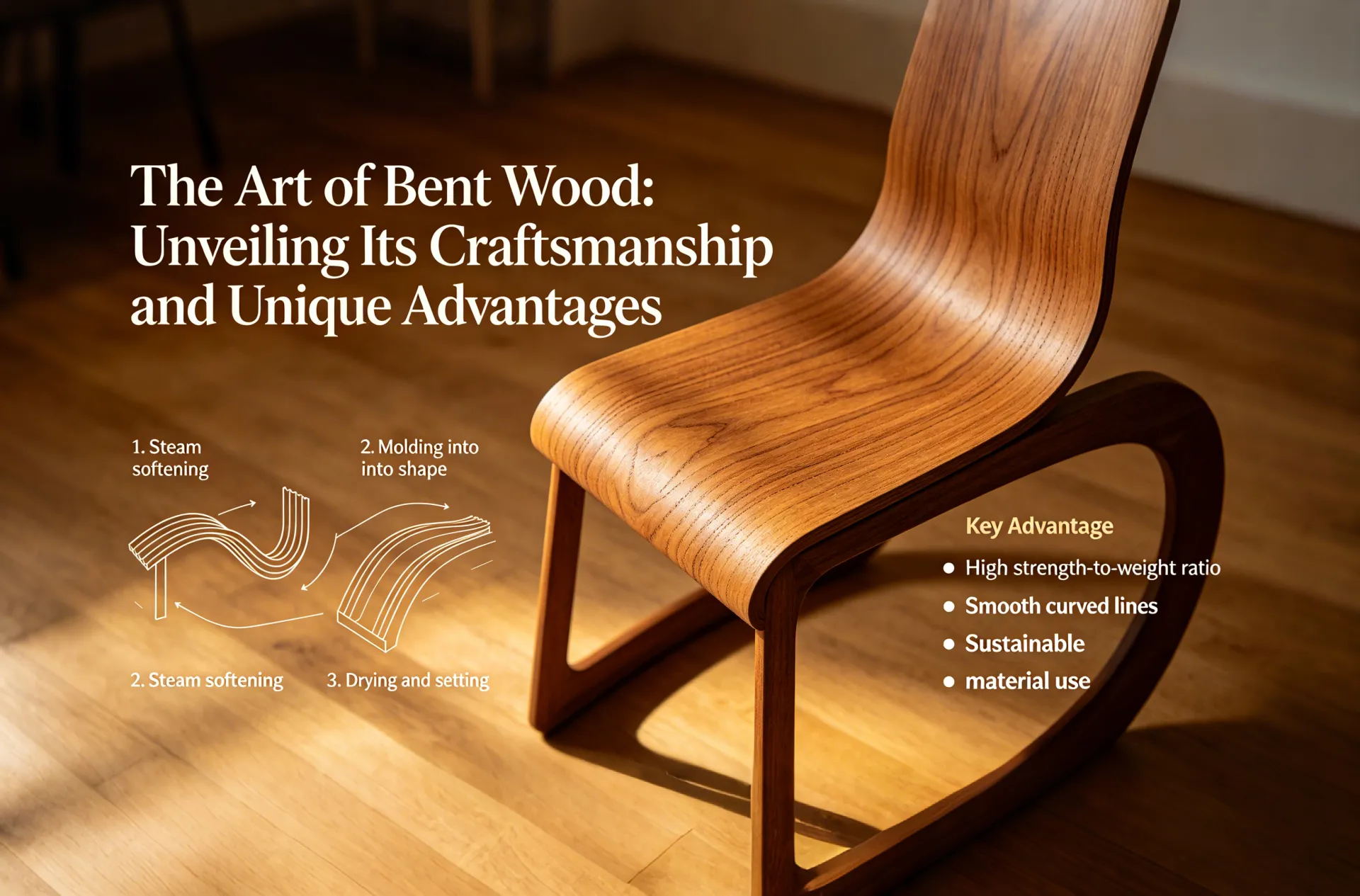
With its sleek curves and distinctive artistic charm, bent wood furniture has secured a prominent place in modern interior design. Behind its seemingly simple curved shapes lies sophisticated and exquisite craftsmanship. This article dives deep into the manufacturing process of bent wood furniture, reveals its unique features, and helps readers gain a better understanding of this elegant and artistic furniture style.
I. Historical Background of Bent Wood
The craft of bending wood boasts a long history dating back to the 19th century. The earliest bent wood technology was invented by German craftsman Michael Thonet in the mid-19th century. He softened wood with steam, bent it into various shapes, and created iconic classic pieces such as the “Thonet Chair.” This innovation not only revolutionized furniture design but also laid the foundation for modern furniture manufacturing.
Over time, bent wood craftsmanship has evolved from traditional steam bending to various modern techniques, including high-pressure molding and cold bending. These advancements have made the design of bent wood furniture more diverse and personalized, catering to the ever-changing tastes of contemporary consumers.
II. Detailed Manufacturing Process
A. Selection of Materials
The production of bent wood furniture starts with the careful selection of high-quality wood. Common types include oak, birch, and beech—all known for their excellent flexibility and strength. When choosing wood, factors such as grain, density, and moisture content are strictly considered to ensure it can withstand the bending process without breaking.
For European and American markets, many manufacturers also prioritize sustainably sourced wood with FSC certification, aligning with the region’s growing focus on environmental protection.
B. Bending Process
- Steam Softening: Wood is first treated with precisely controlled steam to soften its fibers. The temperature and duration of the steam treatment are adjusted according to the type of wood to ensure optimal flexibility, allowing the wood to be bent into the desired shape without damage.
- Mechanical Bending: The softened wood is placed in a specialized mold and bent into the predetermined shape using hydraulic or mechanical pressure. The bending process is slow and uniform to avoid internal stress that could cause the wood to crack over time.
- Natural Drying: After bending, the wood is dried in a controlled environment with stable temperature and humidity. This step is crucial to maintaining the stability of the curved shape and preventing warping or deformation.
C. Shaping and Fixing
- Molding: The bent wood is cooled and set in the specialized mold to lock in its shape permanently.
- Gluing and Fixing: Eco-friendly, non-toxic adhesives are used to secure the bent parts, ensuring durability while meeting European and American environmental standards.
- Precision Processing: Excess material is removed through precision cutting and trimming to ensure accurate dimensions and a seamless finish.
D. Surface Treatment
- Grinding: Multiple rounds of sanding are performed to achieve a smooth, blemish-free surface.
- Coating: Eco-friendly paints or varnishes are applied to protect the wood from moisture, scratches, and UV damage, while enhancing its natural beauty.
- Polishing: A final polishing step gives the surface a natural luster, highlighting the wood’s unique grain and texture.
III. Unique Features
A. Design Advantages
- Smooth Curves: Bent wood furniture achieves naturally flowing curves that are difficult to replicate with traditional straight wood, adding a sense of elegance and fluidity to any space.
- Ergonomic Design: The curved shapes are designed to fit the human body, providing superior comfort for sitting, leaning, or resting—perfect for modern lifestyles that prioritize comfort.
- High Space Utilization: The compact, curved design adapts well to various spaces, saving floor area and making it ideal for small apartments, offices, or commercial venues.
B. Structural Advantages
- High Strength: The bending process enhances the wood’s structural strength, making bent wood furniture more resistant to pressure and impact than traditional straight wood furniture.
- Good Stability: The curved shape distributes weight evenly, improving the furniture’s stability and reducing the risk of tipping.
- Durability: With proper treatment, bent wood furniture is highly durable, able to withstand daily wear and tear for years—making it a long-term investment for consumers.
C. Aesthetic Value
- Natural Beauty: Bent wood highlights the wood’s natural grain and texture, bringing a warm, organic feel to any interior.
- Artistry: Each piece of bent wood furniture is a unique work of art, as the natural variations in wood grain and the precision of the bending process make no two pieces identical.
- Customizable Design: Modern bent wood technology allows for a wide range of unique shapes and styles, making it easy to customize furniture to match individual tastes and interior design themes.
IV. Application Areas
Bent wood furniture is widely used in various settings, catering to the diverse needs of European and American consumers:
- Home Furniture: Chairs, sofas, dining tables, coffee tables, and bedroom furniture—adding elegance and comfort to living rooms, dining rooms, and bedrooms.
- Office Furniture: Ergonomic office chairs, conference tables, and reception desks—combining comfort and functionality to improve work efficiency.
- Commercial Spaces: Hotel lobbies, restaurants, cafes, and exhibition spaces—creating a stylish and inviting atmosphere that attracts customers.
- Custom Creations: Tailored designs based on customer requirements, perfect for unique interior spaces or special projects.
V. Maintenance and Care
Taking proper care of bent wood furniture will extend its lifespan and keep it looking new for years. Here are simple tips for European and American households:
- Daily Maintenance: Clean the surface regularly with a soft, dry cloth to remove dust. Avoid using harsh chemicals or abrasive cleaners that could damage the finish.
- Environmental Adaptation: Keep the furniture in a room with stable temperature and humidity (ideally 18-24°C and 40-60% humidity) to prevent warping or cracking.
- Extend Lifespan: Regularly check the joints and connections to ensure they are tight. Avoid placing heavy objects on fragile parts and keep the furniture away from direct sunlight, which can fade the finish.
VI. Conclusion
As an important technology in the furniture industry, bent wood craftsmanship not only creates beautiful and practical furniture but also showcases the ingenious use of natural materials. With continuous technological advancements, bent wood furniture will continue to play a key role in future interior design, bringing more comfortable, elegant, and sustainable living spaces to people around the world.
By understanding the manufacturing process and unique advantages of bent wood furniture, you can better appreciate these works of art and make informed decisions when purchasing and using them. Bent wood furniture is more than just functional—it is the perfect combination of craftsmanship and art, worthy of being cherished in modern life.