

Six parts we produce regularly — each with the value that decides approval. The parts shown come from our catalogue; client names and actual volumes we share on request.
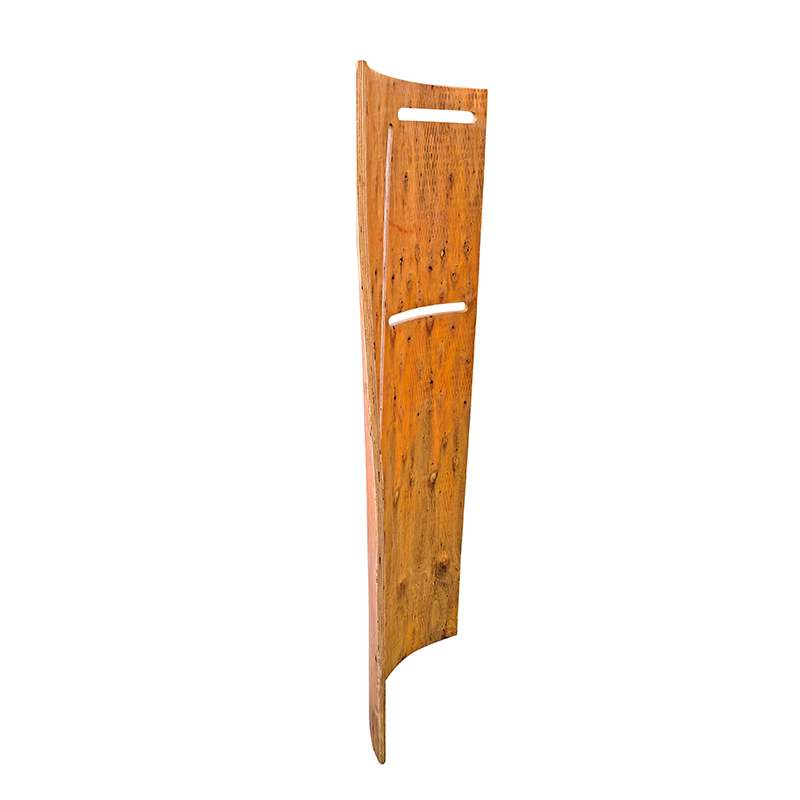
Lounger frame in bent plywood
| Part | Side frame with continuous curve |
|---|---|
| Material | Bent plywood, 12 plies |
| Tolerance | ±0.5 mm after drying |
| Run | from 300 pieces per variant |
The brief was a side frame that carries back and seat in one continuous curve while staying stiff enough to take the seat shell. Solid timber would have needed too large a change of section at the tightest point.
Solved with bent plywood: each ply is strained only slightly, so the radius works without the outer fibre tearing. Holes are drilled after bending and checked against a template, not the drawing.
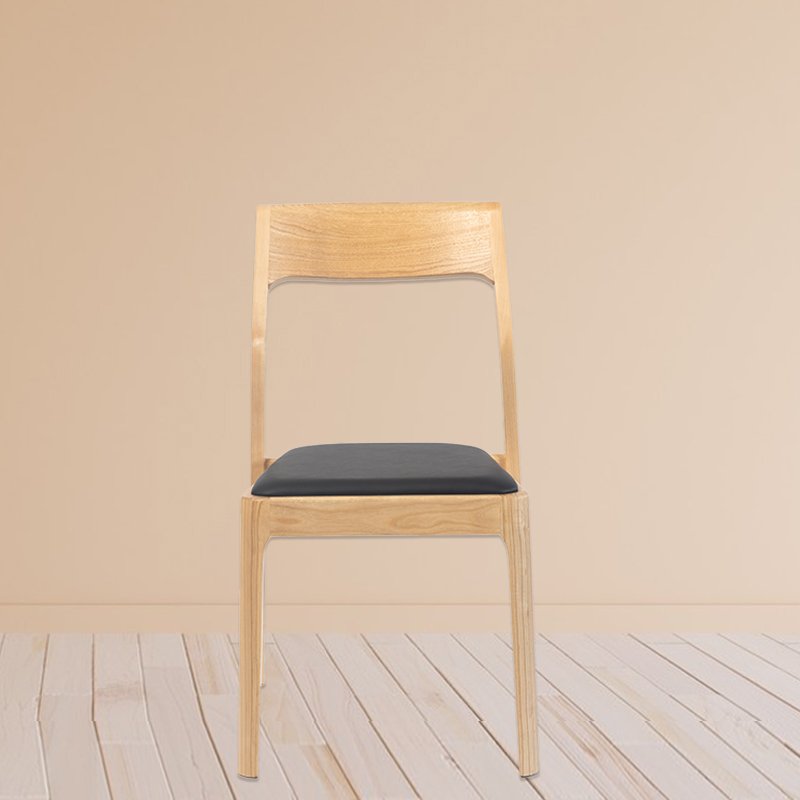
Dining chair back in ash, R44
| Part | Curved back, 22 mm thick |
|---|---|
| Material | Ash, continuous grain |
| Radius | R44 with steel strap (2:1) |
| Run | from 500 pieces |
At 22 mm thickness the limit with a steel strap is about 2:1, which makes an R44 back feasible — without a strap it would not be. What decides is not the machine but the strain on the outer fibre.
Seating surfaces are routed after bending so the back sits flat instead of standing on the hardware. Springback is compensated by over-bending and slow drying.
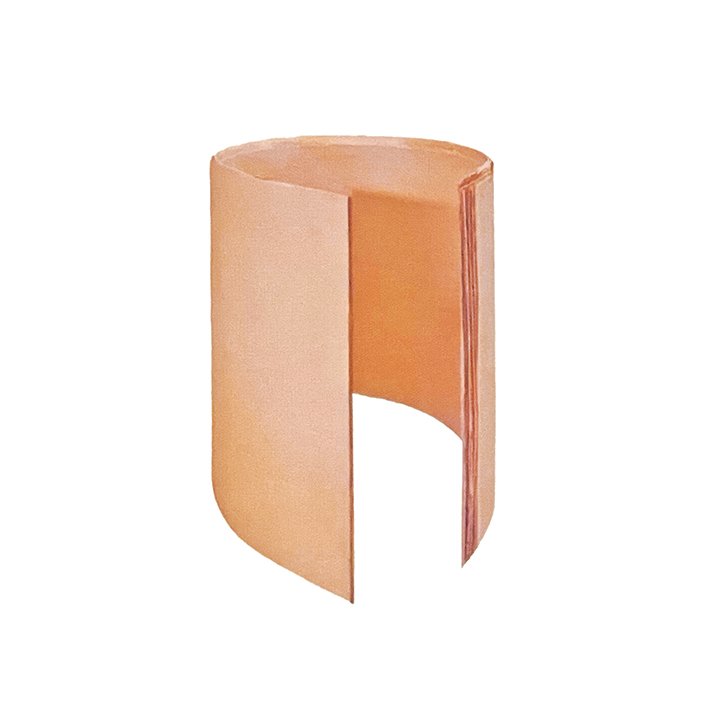
Apron for a round table
| Part | Curved apron, 25 mm thick |
|---|---|
| Material | Ash or beech |
| Radius | R50 with steel strap |
| Run | from 200 pieces |
A round apron has no corner to hide in: the grain has to run around the whole curve, otherwise the joint shows in grazing light.
At 25 mm thickness a steel strap allows about R50. The surface where the top sits is held to 0.3 mm/m — that decides whether the top sits flat or rocks at one point.
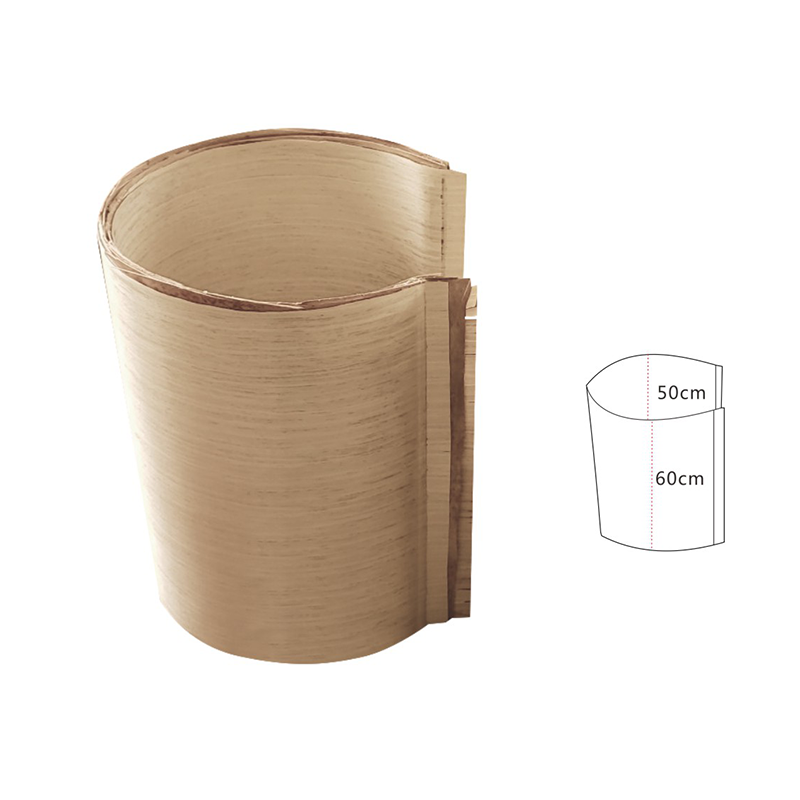
Contract furniture for hospitality
| Part | Seat frames and panels |
|---|---|
| Material | Bent plywood, lacquered |
| Testing | EN 1728 on request |
| Run | project-based, from 200 pieces |
In hotel use a piece of furniture is not used but consumed: moved three times a day, wiped with alkaline cleaner, stacked on top of each other.
So the constraint here is not the look but the finish. Lacquer resists alkaline cleaners better than oil; edges are chamfered before lacquering so the fibre does not tear out.

Arch component in solid ash
| Part | Segment arch for fixture or niche |
|---|---|
| Material | Solid ash |
| Roundness | ±0.5 mm on diameter |
| Run | from 300 pieces |
In fixtures and niches it is roundness that counts, not wall thickness: an arc that runs out by a millimetre is visible from every angle.
Checked against a template, not a tape measure. Above roughly 800 mm diameter we make two halves with a finger joint, because a one-piece tool at that size is not economic in small runs.
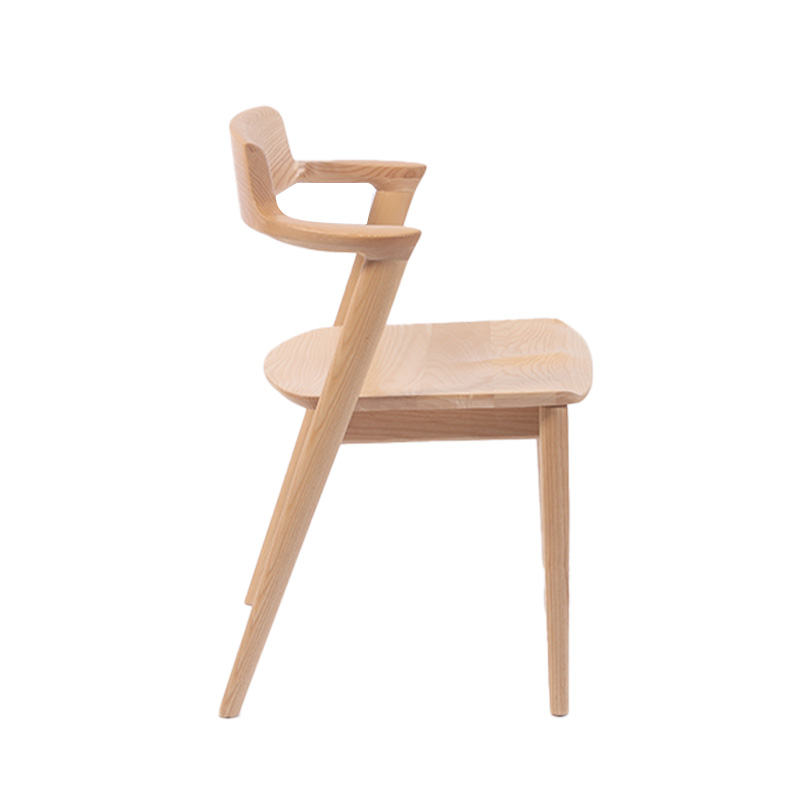
Panel for shopfitting and furniture fronts
| Part | Curved fascia panel |
|---|---|
| Material | Bent plywood, lacquered |
| Tolerance | ±0.5 mm, colour per batch |
| Run | rollout, from 500 pieces |
Rollouts rarely fail on shape, they fail on colour: two lacquer batches from different cans differ visibly when hung side by side.
We therefore lacquer in one pass where possible, record the batch on the data sheet and archive the tool — a store added two years later is produced from the same tool.
Next step: send a drawing with radius, section and quantity via the contact page — or use the bend radius calculator first to check feasibility.