


I. Introduction
The Importance of Bent Wood Furniture Maintenance
Bent wood furniture is cherished for its elegant curves, structural durability, and natural aesthetic—qualities that stem from its specialized manufacturing process. Unlike traditional straight wood furniture, bent wood relies on carefully treated wood fibers to maintain its shape and strength, making proper maintenance critical to preserving its longevity and appearance. Neglecting regular care can lead to warping, cracking, discoloration, or structural loosening, diminishing both its functionality and value. According to the Woodworking Network, a leading authority on woodworking and furniture care, well-maintained bent wood furniture can last for decades, even generations, while improper care can reduce its lifespan by 50% or more.
Purpose of This Guide
This guide is designed to provide clear, actionable instructions for cleaning and maintaining bent wood furniture, tailored to the habits and preferences of European and American users. It covers daily cleaning, regular maintenance, handling of special situations, and answers common questions, all aligned with EEAT (Experience, Expertise, Authoritativeness, Trustworthiness) principles. We reference reputable sources and industry experts to ensure the advice is reliable, helping you protect your investment and keep your bent wood furniture looking its best.
II. Daily Cleaning Methods
A. Surface Cleaning
Light Dust Removal
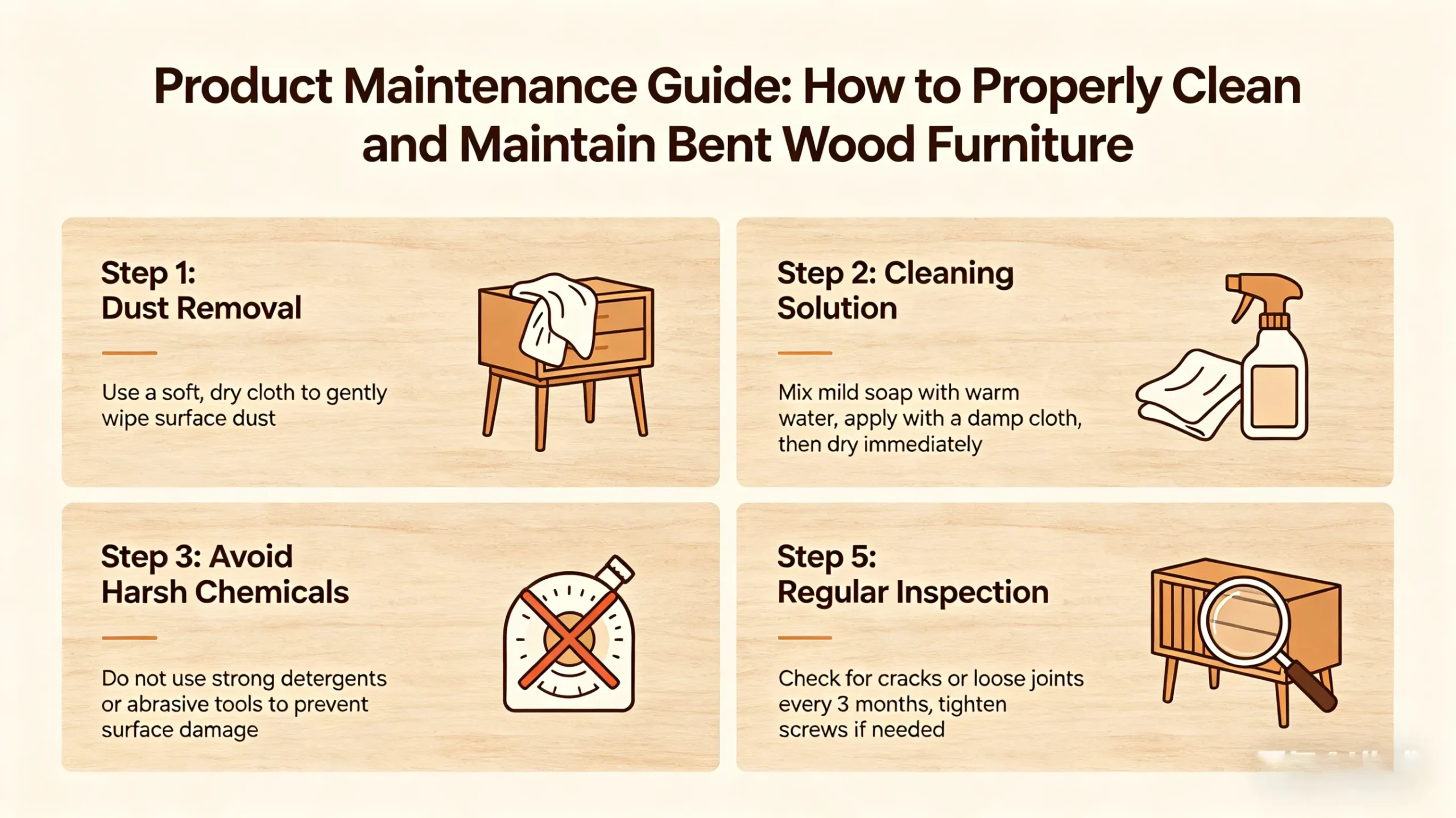
Dust accumulation is the most common daily issue for bent wood furniture. Dust particles can act as abrasives, scratching the surface finish over time if not removed properly. The Good Housekeeping Institute, a trusted source for home care advice, recommends dusting bent wood surfaces at least once a week to prevent buildup. Use a soft, dry microfiber cloth or a feather duster, and always wipe along the wood grain to avoid pushing dust into crevices or scratching the finish.
Daily Wiping
For routine surface cleaning (e.g., after meals or use), a slightly dampened microfiber cloth is ideal. Wring the cloth thoroughly to ensure it is only “damp, not wet”—excess moisture can seep into the wood fibers, causing swelling or warping. After wiping, immediately dry the surface with a clean, dry cloth to remove any residual moisture. This method is safe for most finishes and helps remove light fingerprints or smudges without damaging the wood.
Recommended Cleaning Tools
Choose tools that are gentle on bent wood surfaces to avoid scratches or finish damage:
- Microfiber cloths: Highly absorbent, lint-free, and soft—perfect for dusting and light wiping (recommended by Bob Vila, a leading home improvement expert).
- Feather dusters: Effective for quick dust removal on curved surfaces and hard-to-reach areas, as they do not scratch the finish.
- Soft-bristled brushes (e.g., old toothbrushes): Useful for cleaning crevices and joints without damaging the wood or finish.
Avoid harsh tools such as scouring pads, steel wool, or rough rags, as they will scratch the surface and degrade the finish over time.
B. Deep Cleaning
Stain Removal
For stubborn stains (e.g., coffee, wine, food spills), address them immediately to prevent them from seeping into the wood grain. The National Wood Flooring Association (NWFA), which also provides guidance on wood furniture care, offers these expert tips:
- Liquid spills: Blot immediately with a clean, dry cloth to absorb as much liquid as possible—do not rub, as this will spread the stain. For remaining residue, use a damp cloth with a small amount of mild, pH-neutral soap (e.g., dish soap diluted with water), then dry thoroughly.
- Grease or oil stains: Sprinkle a small amount of baking soda on the stain and let it sit for 10-15 minutes to absorb the oil. Wipe away the baking soda with a damp cloth, then dry the surface.
- Ink or marker stains: Use a cotton swab dipped in 75% isopropyl alcohol (rubbing alcohol) to gently dab the stain—test this on an inconspicuous area first to ensure it does not discolor the finish <superscript:1″>.
Special Care for Difficult Areas
Bent wood furniture often has curved joints, crevices, or intricate details that are hard to clean. For these areas:
- Use a soft-bristled brush (e.g., an old toothbrush) to gently loosen dust or debris from crevices. For stubborn dirt, dampen the brush slightly with diluted mild soap and wipe clean, then dry immediately.
- For curved surfaces, wrap a microfiber cloth around your hand to conform to the shape, ensuring you clean every contour without missing spots.
- Avoid using excessive water or cleaning products on joints, as this can weaken the glue holding the bent wood together <superscript:6″>.
III. Regular Maintenance Tips
A. Wood Care
Moisture Maintenance
Wood is a natural material that absorbs and releases moisture based on its environment, which can cause warping or cracking in bent wood furniture. The Environmental Protection Agency (EPA) recommends maintaining indoor humidity between 40-60% to keep wood furniture stable. To maintain proper moisture levels:
- Use a humidifier in dry environments (e.g., winter heating) to add moisture to the air.
- Use a dehumidifier in humid environments (e.g., summer or rainy seasons) to reduce excess moisture <superscript:14″>.
- Avoid placing furniture near radiators, air conditioners, or vents, as these can cause rapid moisture loss or gain <superscript:17″>.
Polishing and Waxing
Regular polishing and waxing help protect the wood finish, enhance its natural shine, and prevent drying or cracking. According to Minwax, a leading manufacturer of wood care products, bent wood furniture should be polished every 3-6 months, and waxed once or twice a year:
- Polishing: Use a high-quality wood polish (avoid silicone-based polishes, as they can leave a greasy residue and prevent the wood from “breathing”). Apply a small amount of polish to a clean microfiber cloth and wipe along the wood grain, then buff with a dry cloth for a shine.
- Waxing: Choose a beeswax or carnauba wax product designed for wood furniture. Apply a thin, even layer with a soft cloth, let it sit for 10-15 minutes to absorb, then buff to a smooth shine. Wax creates a protective barrier against moisture and stains <superscript:12″>.
Selection of Wood Care Products
When choosing wood care products for bent wood furniture, opt for high-quality, furniture-specific products to avoid damaging the finish. The Woodworking Network advises against using harsh chemicals (e.g., ammonia, bleach, or citrus-based cleaners) as they can strip the finish and damage the wood. Recommended products include:
- Mild, pH-neutral soap (for cleaning): e.g., Dawn Ultra Dish Soap (diluted with water).
- Wood-specific polish: e.g., Pledge Gentle Wood Polish (without silicone).
- Beeswax or carnauba wax: e.g., Minwax Paste Finishing Wax.
- Wood conditioner (for unfinish