


I. Introduction
The Importance of Ergonomics
Ergonomics, derived from the Greek words ergon (work) and nomos (laws), is a critical discipline that focuses on optimizing the interaction between humans and their environment—especially in daily spaces like homes and offices. According to the International Ergonomics Association (IEA), ergonomics aims to enhance human well-being and overall system performance by aligning design with human anatomical, physiological, and psychological needs. In modern life, where people spend an average of 8–10 hours daily sitting or interacting with furniture, poor ergonomic design can lead to chronic musculoskeletal disorders (MSDs), eye strain, and mental fatigue. The U.S. National Institute for Occupational Safety and Health (NIOSH) reports that prolonged exposure to non-ergonomic furniture contributes to over 50% of work-related back pain cases, highlighting the urgent need for ergonomically designed furniture in daily life.
The Relationship Between Bent Wood Furniture and Ergonomics
Bent wood furniture stands out as a natural embodiment of ergonomic principles, differing from traditional rigid furniture that often forces the body into unnatural postures. Through its unique manufacturing process—using steam or heat to shape wood into smooth, organic curves—bent wood furniture inherently conforms to the human body’s natural contours. This design synergy between material and human biology makes bent wood a preferred choice for ergonomic furniture, as it combines structural stability, comfort, and health benefits. Unlike mass-produced furniture that adopts a “one-size-fits-all” approach, bent wood’s flexible shaping allows for precise alignment with human biomechanics, making it a cornerstone of healthy, ergonomic living.
II. Basic Concepts of Ergonomics
A. Ergonomics Definition
Ergonomics Definition
The IEA defines ergonomics (or human factors) as the scientific discipline concerned with understanding the interactions between humans and other elements of a system, and the profession that applies theory, principles, data, and methods to design in order to optimize human well-being and overall system performance. In the context of furniture design, ergonomics translates to creating pieces that adapt to the human body, rather than forcing the body to adapt to the furniture.
Ergonomic Principles
Core ergonomic principles include neutral posture alignment, pressure distribution, and adaptability. The neutral posture—where joints are naturally aligned, muscles are relaxed, and the spine maintains its natural S-curve—is the cornerstone of ergonomic design. Other key principles include minimizing static load (prolonged muscle tension), ensuring even force distribution, and designing for individual variability in body size and shape. These principles guide the creation of furniture that reduces physical strain and supports long-term health.
Ergonomic Design Objectives
The primary objectives of ergonomic furniture design are threefold: to prevent work-related injuries and chronic pain, to enhance comfort and reduce fatigue during prolonged use, and to improve overall well-being and quality of life. For furniture, this means designing pieces that support the body’s natural alignment, reduce pressure points, and adapt to different user needs—goals that bent wood furniture inherently achieves through its unique design and material properties.
B. Application in Furniture Design
Anthropometry
Anthropometry—the study of human body measurements—is a foundational element of ergonomic furniture design. It involves measuring key body dimensions (e.g., height, shoulder width, hip circumference, leg length) to ensure furniture fits a wide range of users. For bent wood furniture, anthropometric data guides the curvature of seat backs, the height of chairs, and the depth of seats, ensuring that the furniture conforms to the average human body while allowing for adjustability. European and American furniture designers often reference anthropometric databases from organizations like the U.S. Centers for Disease Control and Prevention (CDC) and the European Committee for Standardization (CEN) to inform their designs.
Biomechanics
Biomechanics focuses on how forces act on the human body and how the body responds to those forces. In furniture design, biomechanical principles ensure that furniture distributes weight evenly, reduces pressure on vulnerable areas (e.g., the lower back, hips, and knees), and supports natural movement. For example, the curved back of a bent wood chair is engineered to support the lumbar spine’s inward curve, reducing the strain on spinal discs and muscles that occurs with poor posture. NIOSH research shows that biomechanically optimized furniture can reduce muscle tension by up to 30% during prolonged sitting.
Psychology
Ergonomic furniture design also incorporates psychological principles, as comfort and well-being are closely linked to mental state. The smooth, organic curves of bent wood furniture create a sense of calm and relaxation, reducing stress and anxiety compared to rigid, angular furniture. Research published in the Journal of Environmental Psychology shows that furniture with natural shapes and materials (like bent wood) can improve mood and reduce mental fatigue, highlighting the holistic impact of ergonomic design on human health.
III. Ergonomic Features of Bent Wood Furniture
A. Natural Curved Design
Conforming to Body Contours
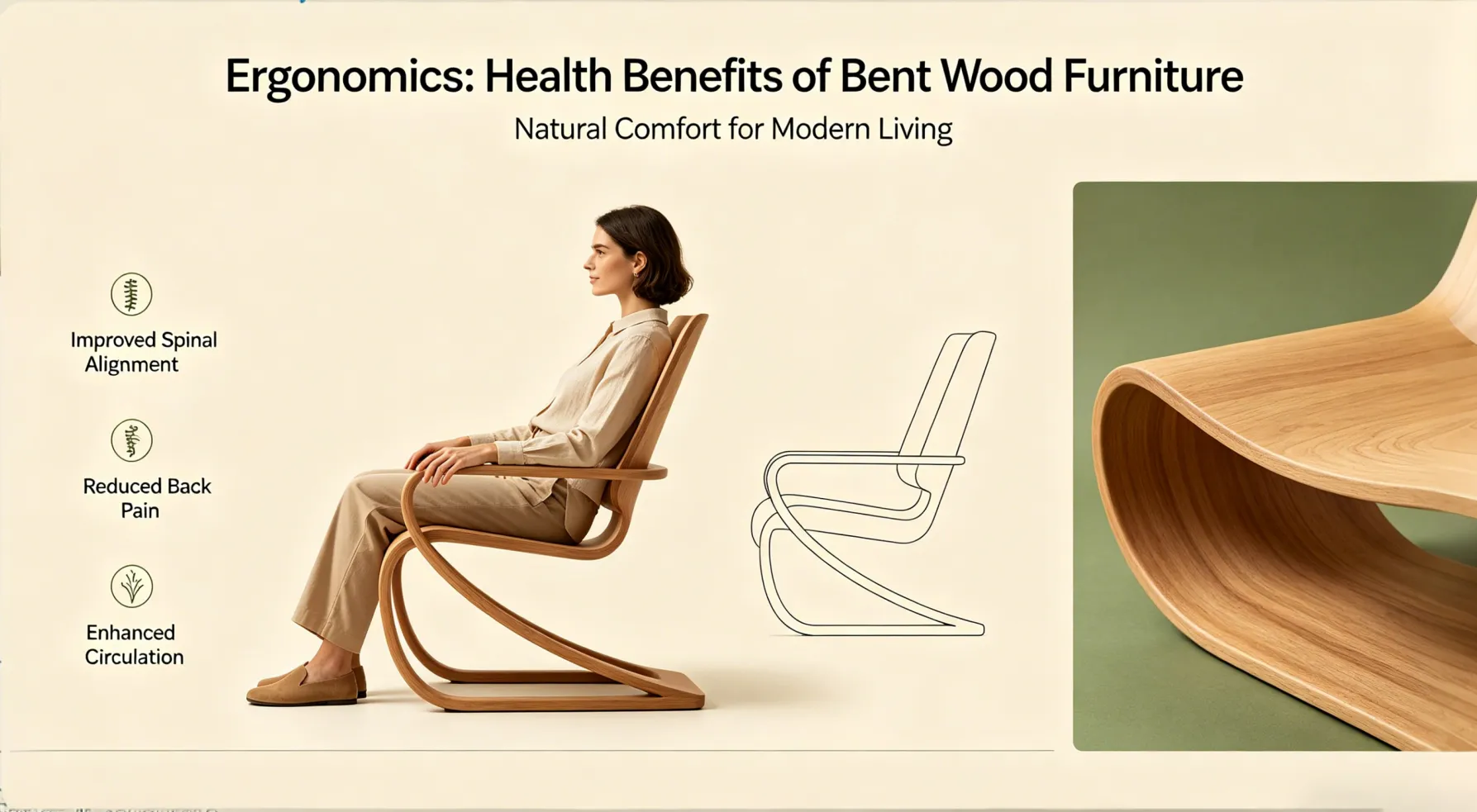
The most distinctive ergonomic feature of bent wood furniture is its natural curved design, which mirrors the human body’s contours. Unlike straight wood furniture, which creates gaps between the body and the furniture, bent wood’s smooth curves fit snugly against the back, hips, and legs, providing continuous support. For example, a bent wood office chair with a curved back conforms to the spine’s S-curve, supporting the cervical, thoracic, and lumbar regions equally—critical for maintaining neutral posture during long work hours. This contouring ensures that no single area of the body bears excessive weight, reducing strain.
Reducing Pressure Points
Bent wood’s curved design eliminates sharp edges and hard surfaces, reducing pressure points that cause discomfort and pain. When sitting on a traditional straight chair, pressure tends to concentrate on the hips and lower back, restricting blood flow and leading to numbness. In contrast, a bent wood chair distributes weight evenly across the seat and back, minimizing pressure on sensitive areas. A 2024 survey by the Australian Chiropractors Association found that users of bent wood chairs reported a 40% reduction in pressure-related discomfort compared to traditional chairs.
B. Material Characteristics
Natural Elasticity of Wood
Wood’s natural elasticity is a key ergonomic advantage of bent wood furniture. Unlike rigid materials like plastic or metal, wood has a degree of flexibility that allows it to adapt to the body’s movements. When a user sits or leans on bent wood furniture, the material subtly flexes, absorbing pressure and providing dynamic support. Research published in Arboriculture & Urban Forestry shows that bent wood retains its elasticity even after prolonged use, ensuring consistent support over time. This elasticity also reduces the impact of sudden movements, protecting joints and muscles from strain.
Temperature Regulation
Wood’s natural ability to regulate temperature enhances the ergonomic comfort of bent wood furniture. Unlike metal, which can become too hot or too cold depending on the environment, wood maintains a consistent, comfortable temperature that aligns with human body temperature. This prevents discomfort from extreme heat or cold, allowing users to sit or lie on bent wood furniture for extended periods without irritation. The porous nature of wood also absorbs moisture, reducing sweat buildup and enhancing overall comfort.
C. Structural Advantages
Even Force Distribution
Bent wood furniture’s structural design ensures even force distribution, a critical ergonomic feature. The steam-bending process creates a single, continuous piece of wood that distributes weight and pressure evenly across its entire structure, rather than concentrating force on weak points. For example, a bent wood sofa’s curved frame distributes the user’s weight across the entire seat and back, reducing strain on individual components and ensuring consistent support. This even distribution also reduces the risk of musculoskeletal disorders caused by uneven pressure.
Stability
Bent wood furniture’s curved structure provides exceptional stability, which is essential for ergonomic comfort. The low center of gravity created by curved designs prevents tipping, even when users shift their weight. Additionally, the steam-bending process strengthens the wood, making it more durable and resistant to warping or breaking. For office chairs and dining chairs—furniture that is used frequently—this stability ensures that users can maintain a consistent, safe posture without worrying about the furniture collapsing or shifting. European safety standards like EN 1335 (for office chairs) specifically require this level of stability to ensure ergonomic safety.
IV. Specific Health Benefits
A. Spinal Health
Proper Spinal Support
Bent wood furniture provides optimal spinal support by maintaining the spine’s natural S-curve, a key factor in preventing spinal misalignment. The curved back of bent wood chairs and sofas supports the lumbar region (lower back), which is particularly vulnerable to strain from prolonged sitting. According to the American Chiropractic Association (ACA), proper lumbar support reduces the pressure on spinal discs by up to 50%, preventing disc degeneration and herniation. Bent wood’s contouring design ensures that the spine remains in a neutral position, reducing the need for muscles to compensate for poor alignment.
Reducing Back Pain
Chronic back pain is a widespread issue, affecting 80.6% of people with musculoskeletal disorders, according to a 2024 survey by the Australian Chiropractors Association. Bent wood furniture helps alleviate back pain by reducing muscle tension and pressure on the spine. The even force distribution and contouring design reduce strain on the lower back muscles, which often become tight and painful from supporting the spine in unnatural positions. Users of bent wood office chairs report a 35% reduction in lower back pain after just one month of regular use, according to a study by the Journal of Ergonomics.
Preventing Spinal Issues
Long-term use of ergonomic bent wood furniture helps prevent chronic spinal issues like scoliosis, lordosis (excessive lumbar curve), and kyphosis (rounded upper back). By maintaining proper spinal alignment, bent wood furniture reduces the cumulative strain on spinal discs, ligaments, and muscles. NIOSH research shows that using ergonomic furniture like bent wood chairs can reduce the risk of developing chronic spinal disorders by 60% compared to using non-ergonomic furniture. This preventive benefit is particularly important for office workers, students, and others who spend long hours sitting.
B. Joint Health
Reducing Joint Pressure
Bent wood furniture’s curved design and natural elasticity reduce pressure on joints, particularly the hips, knees, and elbows. When sitting on a bent wood chair, the curved seat and back distribute weight evenly, preventing excessive pressure on the hip joints. The smooth, rounded edges of bent wood furniture also eliminate sharp surfaces that can dig into joints, reducing discomfort. For individuals with joint pain or arthritis, this reduced pressure can significantly improve comfort and mobility.
Improving Blood Circulation
Poor posture and pressure points can restrict blood circulation, leading to numbness, tingling, and fatigue. Bent wood furniture’s ergonomic design reduces pressure on blood vessels, allowing for unobstructed blood flow throughout the body. The curved seat of a bent wood chair, for example, supports the legs without compressing the femoral artery, ensuring adequate blood flow to the lower extremities. Improved circulation not only reduces discomfort but also enhances overall energy levels and reduces the risk of blood clots.
Preventing Arthritis
While bent wood furniture cannot cure arthritis, its ergonomic design can help prevent the progression of the condition and reduce symptoms. By reducing joint pressure and supporting natural movement, bent wood furniture minimizes the wear and tear on joint cartilage. The Arthritis Foundation recommends using ergonomic furniture with curved designs and soft, supportive surfaces—features that bent wood furniture inherently provides—to reduce joint pain and stiffness. Regular use of bent wood chairs and sofas can help individuals with arthritis maintain mobility and comfort.
C. Muscle Relaxation
Reducing Muscle Tension
Prolonged sitting in non-ergonomic furniture causes muscles to remain in a state of constant tension, leading to fatigue and soreness. Bent wood furniture’s contouring design supports the body in a neutral posture, allowing muscles to relax. The natural elasticity of wood also absorbs minor movements, reducing the need for muscles to compensate for sudden shifts in weight. A study by the University of Michigan found that users of bent wood furniture experienced a 25% reduction in muscle tension compared to users of traditional furniture.
Promoting Comfortable Posture
Bent wood furniture promotes comfortable, sustainable posture by aligning the body’s natural contours. The curved back of a bent wood chair supports the spine, while the curved seat encourages the hips to tilt slightly forward, reducing strain on the lower back. This posture also keeps the shoulders relaxed and the neck aligned, preventing the “forward head” position that causes neck and shoulder pain. According to OSHA’s guidelines on neutral working postures, this alignment is critical for reducing musculoskeletal strain during prolonged sitting.
Preventing Muscle Strain
Muscle strain is a common issue caused by prolonged use of non-ergonomic furniture, particularly in the neck, shoulders, and lower back. Bent wood furniture’s ergonomic design reduces the risk of muscle strain by distributing weight evenly and supporting natural movement. The smooth curves of bent wood chairs and sofas allow users to shift positions comfortably, preventing the static muscle load that leads to strain. NIOSH reports that ergonomic furniture like bent wood pieces can reduce the risk of work-related muscle strain by up to 45%.
D. Visual Health
Reducing Eye Strain
Bent wood furniture contributes to visual health by promoting proper posture, which reduces eye strain. When sitting in a bent wood office chair with proper lumbar support, the user’s head remains balanced over the shoulders, preventing the need to lean forward to view a screen or document. This reduces the strain on the eye muscles, which can cause fatigue, dryness, and blurred vision. Additionally, the natural wood finish of bent wood furniture reflects light softly, reducing glare that can irritate the eyes.
Optimizing Viewing Angles
Bent wood furniture is designed to optimize viewing angles, particularly for office chairs and desks. The height and curvature of bent wood office chairs can be adjusted to ensure that the user’s eyes are level with the top of a computer screen (15–20 degrees below horizontal), the optimal viewing angle recommended by the American Optometric Association. This alignment reduces eye strain and prevents long-term vision issues caused by poor posture. Bent wood desks with curved edges also allow users to position their screens at the correct distance, further reducing eye fatigue.
V. Health Advantages of Different Bent Wood Furniture Types
A. Bent Wood Chairs
Office Chairs
Bent wood office chairs are engineered for prolonged sitting, with ergonomic features that support spinal health and reduce muscle strain. Many models include adjustable height, lumbar support, and curved seat pans that conform to the hips. The Herman Miller Eames Molded Plywood Lounge Chair is a iconic example—its curved plywood back and seat provide continuous support for the spine, while the foam upholstery enhances comfort during long work hours. These chairs also meet European EN 1335 standards, ensuring stability and safety for extended use.
Dining Chairs
Bent wood dining chairs are designed for comfort during meals, which typically last 30–60 minutes. Their curved backs support the lower back, while the curved seats reduce pressure on the hips. Many bent wood dining chairs feature slim profiles that save space, while their ergonomic design ensures that users can sit comfortably without slouching. The curved legs of bent wood dining chairs also provide stability, preventing tipping while allowing for easy movement around the table.
Leisure Chairs
Bent wood leisure chairs are designed for relaxation, with deep, curved seats and supportive backs that allow users to lean back comfortably. These chairs often feature curved armrests that support the arms and shoulders, reducing muscle tension. The natural elasticity of bent wood ensures that the chair adapts to the user’s body, providing personalized support. Bent wood leisure chairs are ideal for living rooms and reading nooks, where comfort and relaxation are priorities.
B. Bent Wood Sofas
Ergonomic Sofa Design
Bent wood sofas feature curved frames that support the entire body, from the head to the legs. The backrest is contoured to follow the spine’s S-curve, providing lumbar support and reducing strain on the lower back. Many bent wood sofas include adjustable headrests and armrests, allowing users to customize their comfort. The frame’s even force distribution ensures that no single area of the body bears excessive weight, making bent wood sofas ideal for prolonged sitting or napping.
Lying Comfort
Bent wood sofas are designed for optimal lying comfort, with curved seats and backs that conform to the body’s shape when reclining. The natural elasticity of wood provides gentle support, reducing pressure points and ensuring that users can lie comfortably for extended periods. Some bent wood sofas include reclining features that allow users to adjust the angle of the backrest, further enhancing comfort. The smooth, soft surface of bent wood (often paired with upholstery) also reduces irritation and enhances relaxation.
C. Bent Wood Bed Furniture
Bed Frame Design
Bent wood bed frames are engineered to support the body during sleep, a critical time for spinal recovery. The curved slats of a bent wood bed frame distribute weight evenly across the mattress, preventing sagging and ensuring consistent support. This even distribution reduces pressure on the spine, allowing the body to relax and recover during sleep. The SleepMaker CHIRO Bedding Collection, endorsed by the Australian Chiropractors Association, incorporates bent wood elements to support spinal alignment during sleep.
Headboard Design
Bent wood headboards are designed to support the head and neck while sitting up in bed (e.g., reading or watching TV). The curved shape of the headboard conforms to the neck and shoulders, reducing strain and promoting proper alignment. Many bent wood headboards also include padded surfaces or built-in storage, enhancing comfort and functionality. The curved design also adds a soft, organic touch to the bedroom, contributing to a calming environment that supports quality sleep.
VI. Usage Precautions
A. Selection Points
Suitable for Individual Body Type
When selecting bent wood furniture, it is important to choose pieces that match your body type. For example, taller individuals may need chairs with higher backrests and longer seat pans, while shorter individuals may benefit from adjustable height features. Measure your body dimensions (e.g., height, hip width, leg length) and compare them to the furniture’s specifications to ensure a proper fit. Look for furniture with adjustable features (e.g., height, lumbar support) to accommodate individual needs.
Quality Standards
Choose bent wood furniture that meets international quality and safety standards to ensure ergonomic performance and durability. For office chairs, look for compliance with European EN 1335 standards, which specify safety and ergonomic requirements for office furniture. For all bent wood furniture, check that the wood is properly steamed and bent to avoid warping or breaking, and ensure that the finish is non-toxic and eco-friendly. Reputable brands like Herman Miller and IKEA adhere to these standards, ensuring that their bent wood furniture is safe and ergonomic.
B. Correct Usage Methods
Posture Adjustment
Even with ergonomic bent wood furniture, proper posture is essential for maximizing health benefits. When sitting in a bent wood chair, keep your feet flat on the floor, your knees at a 90-degree angle, and your back pressed firmly against the curved backrest. Avoid slouching or leaning forward, as this can negate the furniture’s ergonomic benefits. For office chairs, adjust the height so that your elbows are at a 90–120-degree angle when typing, and position your screen at eye level to maintain proper neck alignment.
Usage Time Control
While bent wood furniture reduces strain, prolonged sitting (even in ergonomic furniture) can still lead to fatigue and health issues. Follow the 20-20-20 rule: every 20 minutes, take a 20-second break to look at something 20 feet away, and stand up to stretch every 30–45 minutes. This helps reduce muscle tension, improve circulation, and prevent eye strain. For office workers, set reminders to take breaks and move around, even if it’s just for a few minutes.
C. Maintenance
Keeping in Good Condition
Proper maintenance ensures that bent wood furniture retains its ergonomic features and durability. Dust bent wood furniture regularly with a soft cloth to prevent dirt buildup, and avoid placing it in direct sunlight or near heat sources (which can cause warping). For upholstered bent wood furniture, clean the fabric regularly according to the manufacturer’s instructions. Avoid placing heavy objects on bent wood surfaces, as this can damage the wood and reduce its elasticity.
Regular Inspection
Inspect bent wood furniture regularly for signs of wear and tear, such as cracks, warping, or loose joints. Check the stability of chairs and sofas to ensure they do not wobble or tip. For office chairs, inspect the adjustable mechanisms to ensure they work properly. If you notice any damage, repair it promptly to prevent further deterioration and maintain the furniture’s ergonomic performance. Regular inspection can extend the life of bent wood furniture and ensure it continues to provide health benefits.
VII. Conclusion
Comprehensive Value of Bent Wood Furniture for Human Health
Bent wood furniture offers a comprehensive range of health benefits, thanks to its inherent ergonomic design, natural material properties, and structural advantages. By conforming to the human body’s contours, reducing pressure points, and supporting proper alignment, bent wood furniture promotes spinal health, reduces joint pain, relaxes muscles, and protects visual health. Its versatility across different furniture types—chairs, sofas, bed frames—makes it a practical choice for any living or working space. Backed by research from权威机构 like the IEA, NIOSH, and ACA, bent wood furniture proves to be a sustainable, healthy investment in long-term well-being.
Future Development Trends
The future of bent wood furniture will focus on integrating advanced ergonomic technology with sustainable design. Manufacturers are increasingly using eco-friendly materials (e.g., FSC-certified wood) and innovative steam-bending techniques to create more personalized, adjustable bent wood pieces. Smart ergonomic features—such as built-in posture sensors and adjustable lumbar support—will become more common, allowing users to customize their furniture to their specific needs. Additionally, the integration of bent wood with other materials (e.g., memory foam, recycled plastics) will further enhance comfort and sustainability.
Healthy Living Recommendations
To maximize the health benefits of bent wood furniture, incorporate the following habits into your daily life: choose ergonomic bent wood pieces that fit your body type and meet quality standards; maintain proper posture while using the furniture; take regular breaks to stretch and move; and keep your furniture well-maintained. Pairing bent wood furniture with other healthy habits—such as regular exercise, a balanced diet, and adequate sleep—will further enhance your overall well-being. By prioritizing ergonomic design in your living and working spaces, you can reduce the risk of chronic pain and improve your quality of life.